How Storm Damage Repair Works, Step by Step
Storm damage repair starts with a rapid damage inspection before anything gets torn apart. We photograph every slope, log the storm date, and tarp open decking the same day you call.
- Emergency tarping goes up first, so rain stops pouring through a torn valley or a missing shingle field.
- We document hail bruising, wind uplift, and granule loss with photos your adjuster can actually use.
- A line-item estimate and Xactimate scope go to the insurance company, and we meet the adjuster on the roof.
- After the claim clears, tear-off begins and any rotted plywood or OSB sheathing on the roof deck gets replaced.
- New synthetic underlayment and ice-and-water shield go down at the eave and valley for waterproofing before the field goes on.
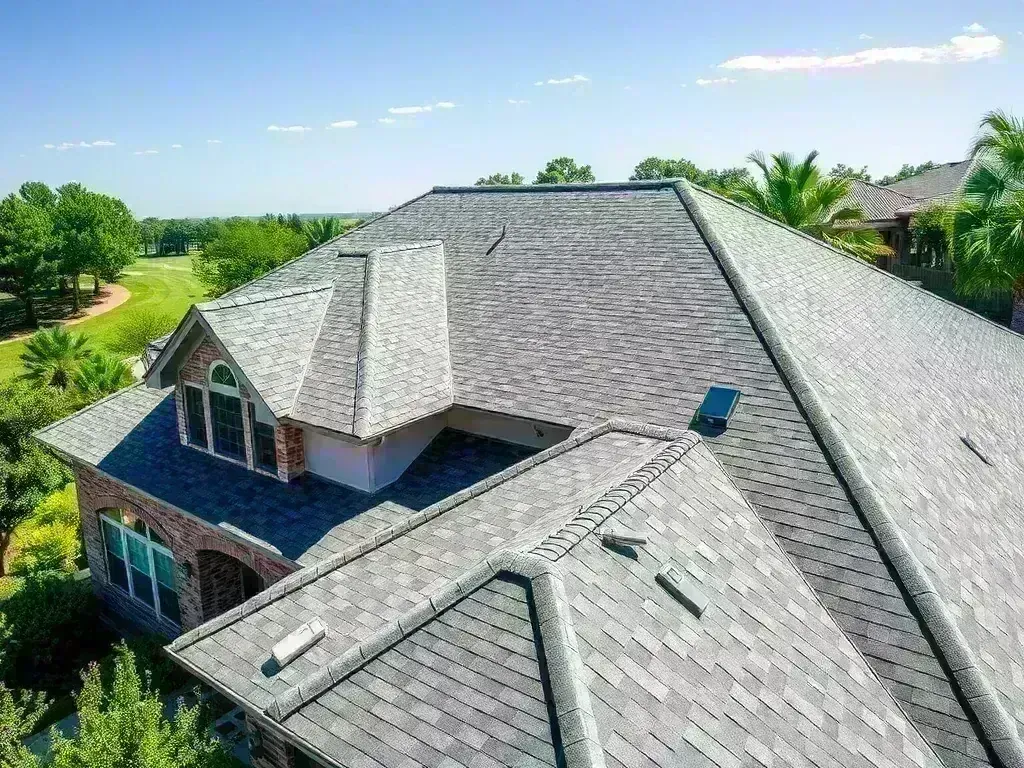
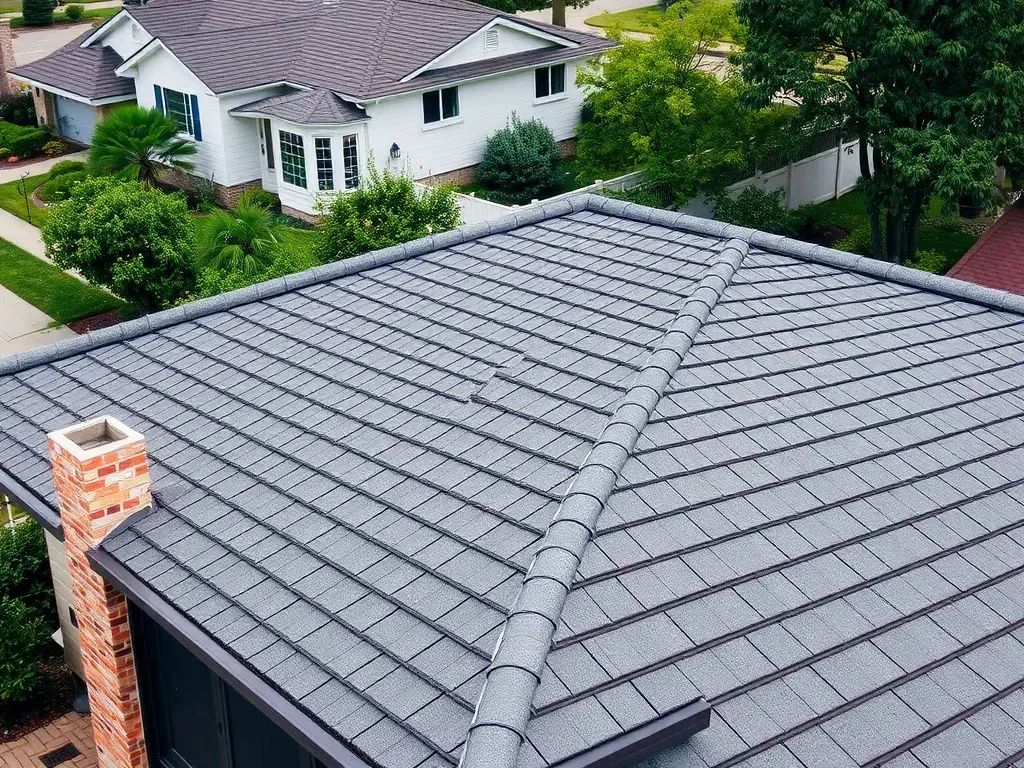
- The shingle field is laid in staggered courses with a starter course, then ridge cap shingles and a ridge vent close the top.
- Flashing gets rebuilt last: step flashing at walls, chimney flashing, counter-flashing, drip edge, and pipe boots.
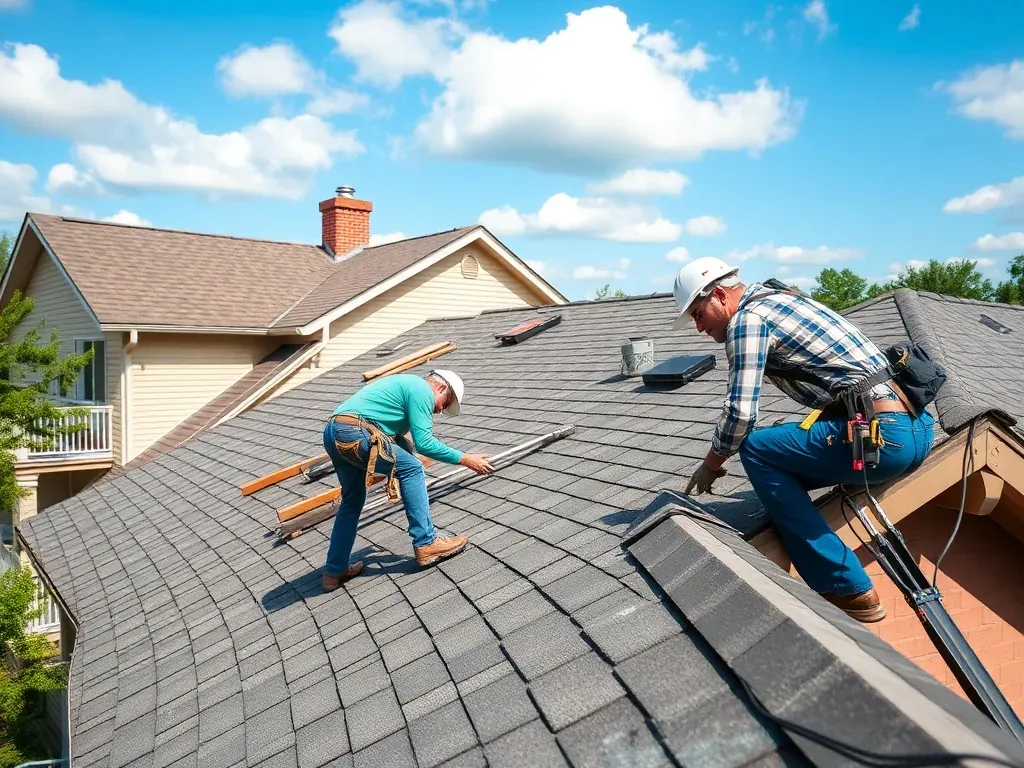
On steep pitches we work from a ladder, scaffold, and safety harness. A pry bar, roofing shovel, nail gun, and air compressor handle the tear-off and fastening, with a dumpster parked in the driveway.
Materials We Choose, and Why
Most homes get asphalt shingles rated for high wind. GAF and Owens Corning both make insurance-approved lines we install and stand behind.
- Architectural shingles outlast three-tab shingle systems and resist the wind uplift we get off the Gulf.
- Synthetic underlayment replaces roofing felt and tar paper, which turn brittle in our summer heat and flake apart.
- Self-adhered ice-and-water shield seals the eave and valley, where an ice dam or backed-up rain pushes water uphill.
- Ring-shank nails hold far better than staples or short screws in humid attic conditions and pass fastener pull checks.
- Modified bitumen membrane, torch-applied or self-adhered, covers porches, awnings, and low-slope canopies where shingles do not belong.
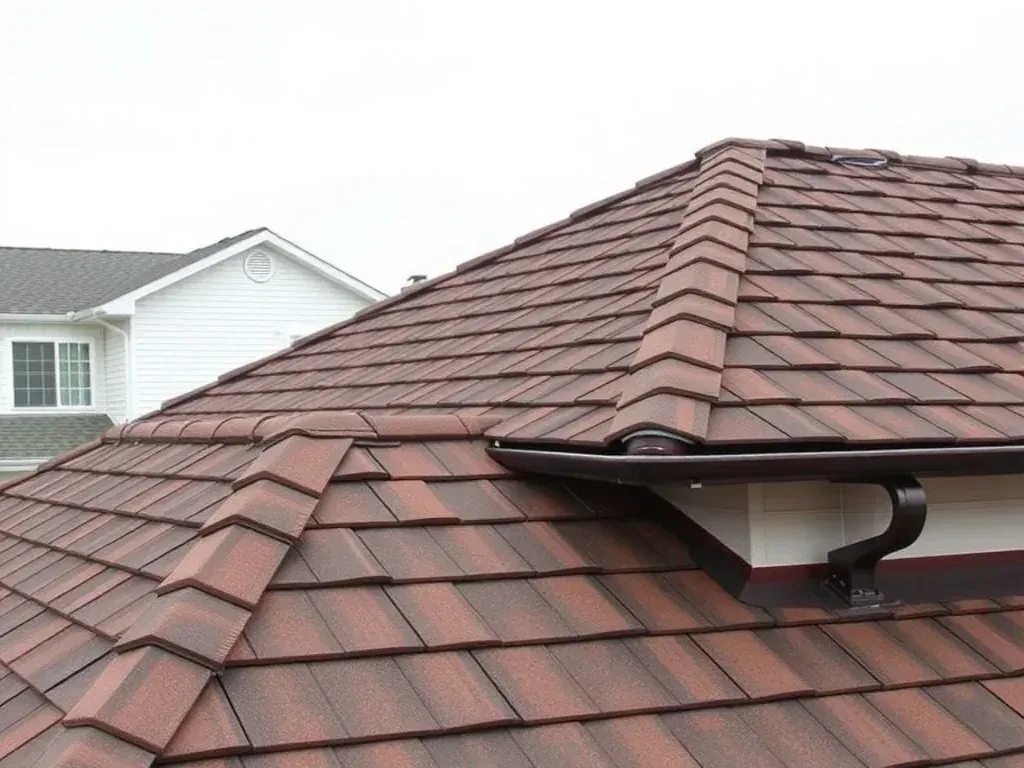
- Clay tile, concrete tile, and slate weigh far more than asphalt, so we check the truss and rafter loads first.
- Metal panel, standing-seam panel, and corrugated panel roofs need purlins or a batten and counterbatten grid over a dry substrate.
- Wood shake and cedar shake still sit on older homes here, and we match the exposure and grade when we repair them.
Caulk and surface sealant hide a bad flashing job for one season at best. We replace the metal instead.
What a Roof Inspection Actually Checks
Your roofline and rooftop tell the story long before you see a stain on the ceiling. Water wicks along the decking, soaks the insulation, and shows up far from the leak.
- Missing, curled, or bruised shingles point to hail damage, wind uplift, or plain end-of-life wear.
- Granule loss and storm debris collecting in the gutter and downspout mean the asphalt mat is thinning.
- Rotted fascia, soffit, and rake boards mean water has been running behind the gutter for a while.
- Cracked pipe flashing and a dried-out pipe boot or vent boot at a plumbing vent or skylight are the most common small leak we find.
- Rusted counter-flashing, a dried-out apron flashing, or a loose boot flashing around a chimney, dormer, or skylight lets water seep into the sheathing.
- A look at the vapor barrier, soffit vent, and insulation shows whether ventilation works or moisture is just sitting.
- Sagging between rafters or a joist, a cracked truss, or a damp ridge beam means structural trouble, not surface wear.
Local Conditions That Change the Work
Gulf storms, humidity, and months of hard sun wear a roof differently here. Hurricane-force wind tears at the verge and overhang, while UV light bakes the bitumen out of asphalt.
On a hip and gable roof, wind loads hit the rake and verge edges hardest, so those get nailed to the current wind schedule. Mansard and gambrel shapes trap water behind the lower slope, which is where we look first.
Building code updates on nailing patterns and drip edge placement affect every re-roof, and we pull to current code.
Timelines and Cost Drivers
A reseal or patch job usually finishes in a few hours. A full storm re-roof runs two to four days, weather permitting, plus dumpster drop and final inspection time.
Cost moves with square footage, roof pitch, how many layers come off, decking condition, and whether the scope includes gutter and fascia work. We measure in roofing squares, and most single-family homes here land between 20 and 40.
Any roofer who quotes a storm job without checking the decking is guessing. Every number lands in a written roof estimate from a licensed, insured roofing contractor before we start.